
Old family photographs can be a treasure trove of memories, providing glimpses into the lives of your ancestors and the history of your family. Each picture has a story to tell, and sometimes just a little bit of detective work is needed to uncover the mysteries behind these visual time capsules. In this Introduction to Old Family Photographs, we will help you learn how to find the clues that can reveal the stories and emotions captured in those old snapshots.
You’ve probably experienced the joy of discovering an old photograph at your grandparents’ house or hidden in a box of family heirlooms. The moment you hold that picture, you are transported back in time, and you can’t help but wonder about the people in the image and their stories. As you embark on your journey to uncover the stories behind your old family photographs, you will not only connect with your own family history but also learn about the world at the time when the photos were taken.
In the next sections, we will explore techniques to help you find genealogy clues in old photos, identify the subjects and settings, and even decode fashion styles and trends of the time. With each photograph you investigate, you’ll uncover a story that connects you to your past, allowing you to cherish and preserve your family legacy for future generations.
Decoding the Era: Techniques to Date Your Old Family Photos
In this section, we will explore various techniques and tips to help you uncover the stories behind your old family photographs by identifying the era in which they were taken. By understanding the clothing styles, context, and photo types, you can better appreciate your family’s history and the memories captured in those photos.
Fashion Through the Ages: Identifying Clothing Styles
One helpful way to date old family photos is by examining the clothing styles worn by the subjects in the images. Fashion trends can provide clues about the time period when the photograph was taken. Pay close attention to details such as the length and style of dresses, the type of collar on shirts, and the hairstyles of the people in the photograph. For instance, a woman wearing a Gibson Girl hairstyle likely indicates the photo was taken during the late 19th or early 20th century.
Background and Setting: Understanding the Context
Another way to gather clues about the timeline of your old family photographs is by examining the background and setting. Were the pictures taken indoors or outdoors? What kind of furniture and decorations do you see? These details might help you understand the context of your family’s lives during that period. For instance, a photo featuring elaborate wallpaper and ornate furniture might suggest a higher social standing, while pictures taken against a plain background, such as in a daguerreotype, might imply a more modest situation.
Photo Types and Formats: From Daguerreotypes to Polaroids
Different photo types and formats can also provide hints about when an old family photo was taken. Here’s a brief list of popular photograph types from the past and the time periods in which they were prevalent:
- Daguerreotypes (1839-1860): The first practical form of photography, these images were produced on a thin copper photo plate with a mirror-like silver surface.
- Tintypes (1856-1930): Also known as ferrotypes, these photographs were produced on a thin sheet of iron coated with black enamel or lacquer.
- Cabinet cards (1870-1900): Larger and more durable than earlier formats, cabinet cards were albumen prints mounted on thick cardboard, usually featuring individuals or small family groups.
- Polaroids (1948-forward): Instant photographs developed in minutes by the Polaroid Corporation, often seen in casual, candid snapshots.
As you examine your old family photos, use these techniques and tips to decode the era and learn more about your ancestors’ lives and experiences. Remember, every picture has a story to tell, and with a bit of investigative work, you can uncover the fascinating tales hidden within your family’s photographic history.
Faces of the Past: Identifying Ancestors in Photographs
Facial Recognition: Comparing Features Across Generations
Uncovering your family history can be an exciting journey, and old photographs often hold the key to unlocking the stories of your ancestors. One effective way to identify people in these photos is by comparing facial features across generations. Pay attention to distinctive characteristics such as the shape of the nose, the size of eyebrows, or the curve of a smile. It’s amazing how traits can be passed down from one generation to another.
For example, while I was looking through my own family’s old photos, I noticed that my great-grandmother and I shared the same striking blue eyes and high cheekbones. This resemblance made it easier to identify her in several group photos and introduced me to her rich history as a skilled dressmaker in the early 20th century.
Group Dynamics: Understanding Family Relationships Through Poses
Family photographs, especially group shots, can also provide clues about the relationships between individuals. Analyzing group dynamics through poses and interactions can help you piece together the stories behind the photos. Look for:
- Proximity: Close family members are often posed near each other in group photos.
- Physical contact: Touches or embraces can signify close relationships.
- Similar clothing: Family members may wear matching or coordinated outfits to denote unity.
One family photo I found, dating back to my great-great-grandparents, showed them seated with their children posed behind them, creating a strong visual lineage. Noticing that two of the children wore matching dresses, I took a closer look and realized they were twins. This discovery led me to find their birth records, which were previously hidden in my genealogy research.
Using these techniques, you can reveal the stories behind your family photographs and bring your ancestors to life. Enjoy the process and cherish the connections you forge through this fascinating exploration.
Preserving the Legacy: Safeguarding Old Photographs for the Future
Cleaning and Storage Techniques
Proper preservation of your old family photographs begins with good cleaning and storage techniques. First and foremost, always remember to handle your photos with clean hands to avoid transferring substances like oils and dirt to the photos. When cleaning old photographs, use a soft brush to gently remove dust particles. Never use chemicals or water, as they can cause damage to the photos.
When it comes to storage, it’s important to select a suitable environment. Store old photographs at constant temperatures below 75 degrees Fahrenheit and maintain humidity levels between 15% and 65% to prevent chemical decay or mold growth1. It’s best to avoid locations such as basements, attics or garages which experience temperature fluctuations. Instead, place them in a stable environment like a closet or storage room. To protect the photos from damage, store them in acid-free, lignin-free, and archival-quality materials like photo-safe plastic sleeves or boxes.
Digital Restoration Methods
In this digital age, preserving your cherished family photographs for the future requires more than just proper cleaning and storage. It becomes essential to digitize photos to protect them from unforeseen accidents or loss, and to share them with loved ones. Scanning or photographing your old photos is the first step towards ensuring their longevity2. Here are some tips for successful digital preservation:
- Scan at high resolution: A high-resolution scan (300 dpi or higher) will retain the details and quality of the original image, allowing for better reprints or enlargements.
- Crop unwanted borders: Trim any unwanted edges to focus on the main subject and to reduce the file size.
- Adjust color levels and contrast: Enhance the quality of the digital photograph by using image editing software to correct color imbalances and improve contrast.
- Save in a universally-readable file format: Save your scanned images in a non-compressed file format like TIFF, which ensures that the image quality remains high and the file is compatible with various devices.
- Store in multiple locations: To mitigate the risk of data loss, save digital copies of your images on different storage devices or in the cloud, and share them with other family members.
By following the above-mentioned cleaning and storage techniques, along with adopting the digital restoration methods, you can successfully preserve the rich legacy captured in your old family photographs for generations to come.
Footnotes
Creating a Family Photo Archive
Organizing the Collection
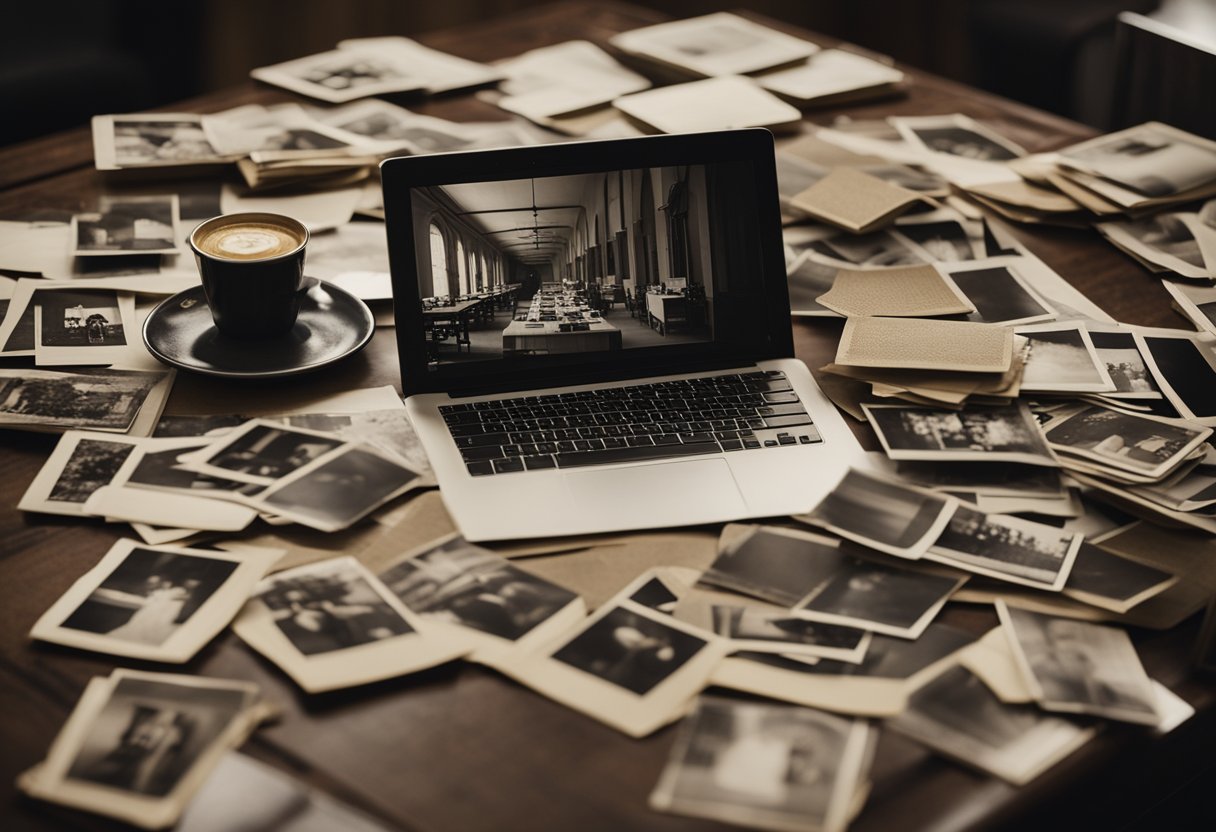
Old family photographs carry a wealth of information and stories just waiting to be discovered. To begin creating your family photo archive, you should first focus on organizing the collection. Start by gathering all your photographs, negatives, and slides in one place. To prevent any damage to the photos, it’s best to store them in a cool, dry place, away from direct sunlight.
Next, sort your photos into categories to make managing the collection easier. You can arrange them by date, event, or family member. Don’t forget to tag and label each photo with relevant information, such as names, dates, and locations. You can use software to digitize your photographs for better preservation, like the one recommended in this Family Tree Magazine article. This way, you can easily back them up and share them with other family members.
Sharing and Storytelling
Once your family photo archive is organized, it’s time to unlock the stories and memories behind every photo. Sharing your collection with family members is a great way to gather more information and learn about the experiences and memories associated with each photograph.
Consider creating a digital family tree on a platform like FamilySearch, where you can upload and tag photos to individual profiles. This not only makes it easier for your relatives to find and view the pictures, but it also helps weave together the narratives of your family’s history.
Another way to share these visual stories is by putting together a family photo album or a slideshow presentation for family gatherings. You can even host a “photo storytelling night” where your family comes together to exchange anecdotes and memories related to the pictures.
Remember to always be open and friendly while discussing the family photos, as sometimes sensitive memories and emotions may emerge. The goal is to preserve your family’s history and keep these powerful stories alive for future generations to cherish.

